Oxford Handbook of Clinical Diagnosis 2e
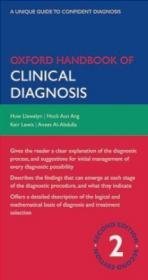
Opis
- A unique handbook enabling students and doctors to explain their diagnostic reasoning clearly to patients, colleagues and examiners
- Suggests the preliminary tests to be considered for each symptom and sign
- Helps diagnoses to be suggested with a sensible degree of certainty and clear supporting evidence
- Suggests the 'Initial management' for each diagnostic possibility
- Describes the logical and mathematical basis of evidence-based differential diagnosis
New to this edition
- Each page describing the differential diagnosis of a symptom or sign now suggests 'Initial tests'
- The 'Initial management' is also suggested for each diagnosis
- The diagnostic process and its logical basis is explained in mathematical detail to allow the differential diagnostic process to be made evidence-based
Readership: Medical students, trainee doctors, general practitioners,hospital specialists, clinical teachers, researchers, statisticians, public health doctors and others managing health care organisations, and all professions allied to medicine e.g. nurses, pharmacists, etc.
Huw Llewelyn, Kettering General Hospital, Kettering, Northamptonshire, UK, Hock Aun Ang, Honorary Senior Lecturer in Medicine, Penang Medical College, Consultant Physician and Endocrinologist, Seberang Jaya Hospital, Penang, Malaysia, Keir E Lewis, Senior Lecturer in Respiratory Medicine, Clinical School, Swansea University, Honorary Consultant Physician, Carmarthenshire NHS Trust, UK, and Anees Al-Abdullah, General Practitioner, Kidwelly, Camarthenshire, UK
Huw Llewelyn qualified in Medicine at the University of Wales in 1970. In 1975 he became senior registrar and lecturer in medicine and endocrinology at St Bartholomew's Hospital London. In 1979 hewas appointed Consultant Physician at King's College Hospital London. His MD was sponsored by the Nobel Laureate Sir James Black FRS and describes new theorems in probability theory that allow tests to be designed and assessed in a systematic way for differential diagnosis and identify patients who probably respond (or do not respo